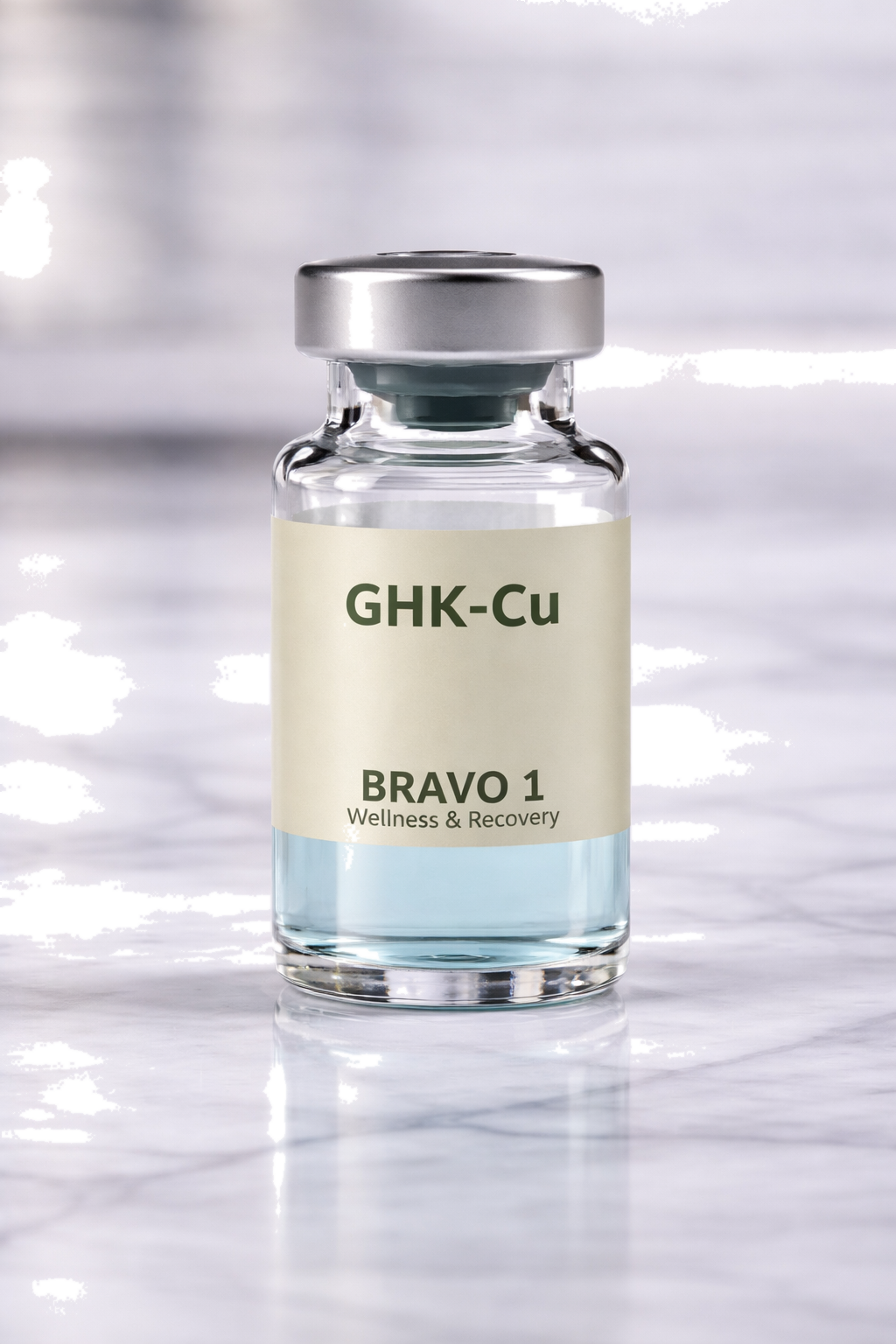
Copper Peptide GHK-Cu
A naturally occurring copper-binding peptide with an extensive research base in skin regeneration, collagen synthesis, wound healing, and anti-inflammatory activity.
Physician review required · Ships in 48h after approval · All 50 states
GHK-Cu (Glycyl-L-Histidyl-L-Lysine Copper) is a naturally occurring peptide that was first isolated from human plasma in the 1970s. It binds tightly to copper ions and has since been studied extensively for its role in skin health, wound healing, and tissue repair.
What makes GHK-Cu remarkable is the breadth of its documented effects in research. It has been studied for its ability to stimulate collagen synthesis, promote wound healing, reduce inflammation, act as an antioxidant, and even influence gene expression in ways that may support healthy aging.
GHK-Cu works by binding copper ions and delivering them to cells, facilitating enzymatic reactions critical to tissue repair. It activates pathways involving collagen, elastin, and glycosaminoglycan production, and modulates gene expression in ways associated with skin regeneration and anti-aging.
The research on GHK-Cu spans multiple decades and institutions. Studies have examined its effects in preclinical and clinical settings. Our Education Center contains curated summaries of the most relevant published literature. As with all research peptides, individual results vary and the evidence base continues to evolve.
The appropriate administration method, dosage, and protocol for GHK-Cu is determined through the BRAVO1 physician review process based on your individual health profile and wellness goals. Do not self-administer any peptide protocol without physician oversight.
View certificate of analysis and batch testing for GHK-Cu.
Start the physician review process for GHK-Cu. Ships within 48 hours of approval to all 50 states.
Start Physician Review →This website is intended for educational and informational purposes only. Products and services are subject to physician review and approval. Information provided is not medical advice. These statements have not been evaluated by the FDA.